The Housing Market Is Softer. But There's One Number I Think Buyers Should Be Watching

If you've been waiting for the BC housing market to “make sense” again, July probably didn't help.
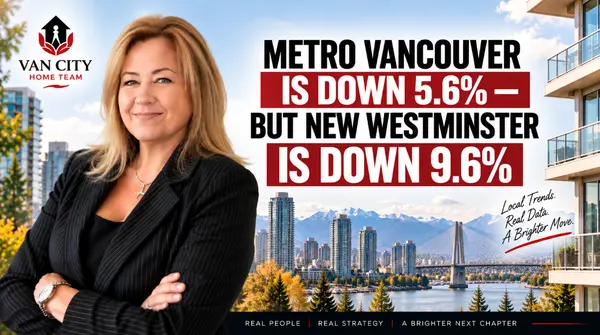
Metro Vancouver home sales dropped nearly 10% compared with last July. Fraser Valley benchmark prices are roughly 7% lower than a year ago. Vancouver Island sales are down too. At first glance, this looks like a very straightforward story: buyers aren't buying and prices are adjusting.
But that's only today's market.
I'm much more interested in what's happening underneath it.
Metro Vancouver currently has considerably more inventory than its historical seasonal norm, which gives buyers something valuable: choice and negotiating power. On Vancouver Island, slower activity gives lifestyle buyers more time to compare communities and properties instead of making rushed decisions.
For someone considering selling on the Mainland and moving to the Island, that's particularly important.
You're not really making one real estate decision.
You're making two.
What can I realistically sell my current home for?
And what can that equity buy me somewhere that better fits the next stage of my life?
But there's another number buyers should be watching: new construction.
CMHC has been warning about weakness in the future ownership-housing pipeline, particularly in Vancouver. Condo presales have dropped sharply, project economics have become much more difficult and housing starts are expected to decline over the coming years.
That's why I wouldn't automatically assume today's buyer-friendly conditions will simply continue indefinitely.
We could have an unusual window where resale inventory is relatively plentiful, buyer competition is muted and prices have softened — while the future supply pipeline is simultaneously getting smaller.
Does that mean everyone should rush out and buy?
Absolutely not.
It means this is a market that rewards strategy rather than prediction.
After more than 25 years in real estate, I've seen buyers and sellers get into trouble when they try to perfectly call the top, bottom or next interest-rate move.
The better question is:
What does today's market allow me to do that I couldn't do two years ago?
Sometimes the opportunity isn't that prices are about to skyrocket.
Sometimes it's simply having enough time, choice and negotiating power to make a much better decision.
If you're trying to understand whether that opportunity exists in your particular Mainland or Vancouver Island market, reach out. I'll help you look at the numbers — and more importantly, interpret what they actually mean for your move.
Categories
Recent Posts









GET MORE INFORMATION