Should I Buy a Vancouver Condo With a Special Levy?
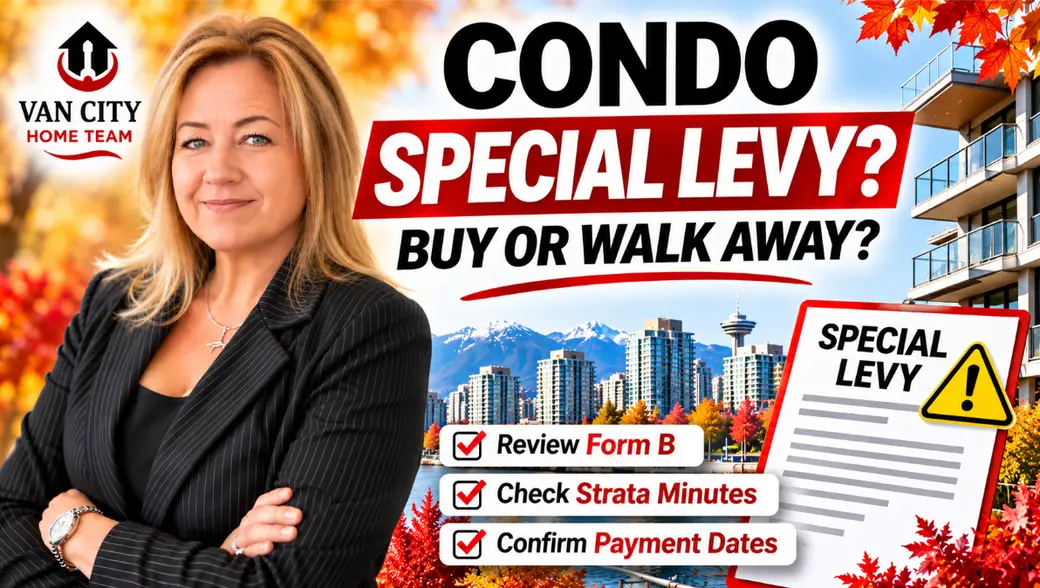
Should I Buy a Vancouver Condo With a Special Levy?
A special levy doesn't automatically make a Vancouver condo a poor purchase. It means you need to understand the project, the payment obligation, and the remaining building risk before deciding whether the price is attractive.
The first question is whether the levy is approved, proposed, or only being discussed.
What Is the Special Levy Paying For?
Review the resolution, engineering reports, scope of work, and available estimates. Find out whether the contract has been awarded and what could cause the cost to rise.
Necessary work such as an envelope, roof, plumbing, or elevator project may protect the building's long-term value. The concern isn't simply that owners must pay. It's whether the project has been properly investigated, realistically funded, and competently managed.
What Do the Strata Documents Reveal?
Read the current Form B, the depreciation report, the financial statements, the insurance information, and at least two years of council, annual general, and special general meeting minutes.
The Form B discloses any amount the owner is obligated to pay for a special levy that has already been approved, along with the due date, and the contingency reserve fund balance less approved expenditures not yet paid. It doesn't list levies that haven't been approved. Source: Province of BC
That's why the minutes matter. They may reveal proposed projects, repeated water problems, legal disputes, rising insurance deductibles, or maintenance that hasn't reached a formal vote yet.
Don't examine the current levy in isolation. Ask which major building components are expected to need work next.
Who Pays the Levy After the Condo Sells?
Responsibility can depend on when the levy was approved, its payment schedule, and the contract terms. The parties may negotiate a credit or another arrangement, but it must be documented correctly. Get legal advice if the obligation is unclear.
Calculate the complete acquisition cost: the purchase price, the levy payments, immediate unit repairs, and the cash reserve you'll have left afterward.
The Bottom Line
A condo with a levy may still be the better purchase if the price properly reflects the obligation and the work leaves the building in a stronger position. A condo with no levy may carry more risk if owners have simply postponed necessary repairs.
The useful question isn't "Does this building have a levy?" It's "After this levy is paid, what has been fixed, and what risk remains?"
If you're considering a move, buying, selling, or want help figuring out your next step, reach out to me. I'd be happy to help or connect you with the right person.
Frequently Asked Questions
Can a buyer negotiate because of a special levy? Yes. An approved or reasonably anticipated cost may influence price and contract terms, although the seller doesn't have to accept the proposal.
Does the seller always pay an approved levy? Not automatically. Timing, payment dates, legislation, and the contract all matter.
Is a large reserve fund proof that the building is healthy? No. Compare the reserve with the depreciation report, upcoming work, and the size and age of the building.
Can a special levy affect financing? Potentially. Lenders and insurers may consider the building's condition, finances, and project risk.
Categories
Recent Posts






GET MORE INFORMATION