Canadian inflation falls to 2.8%, core measures ease
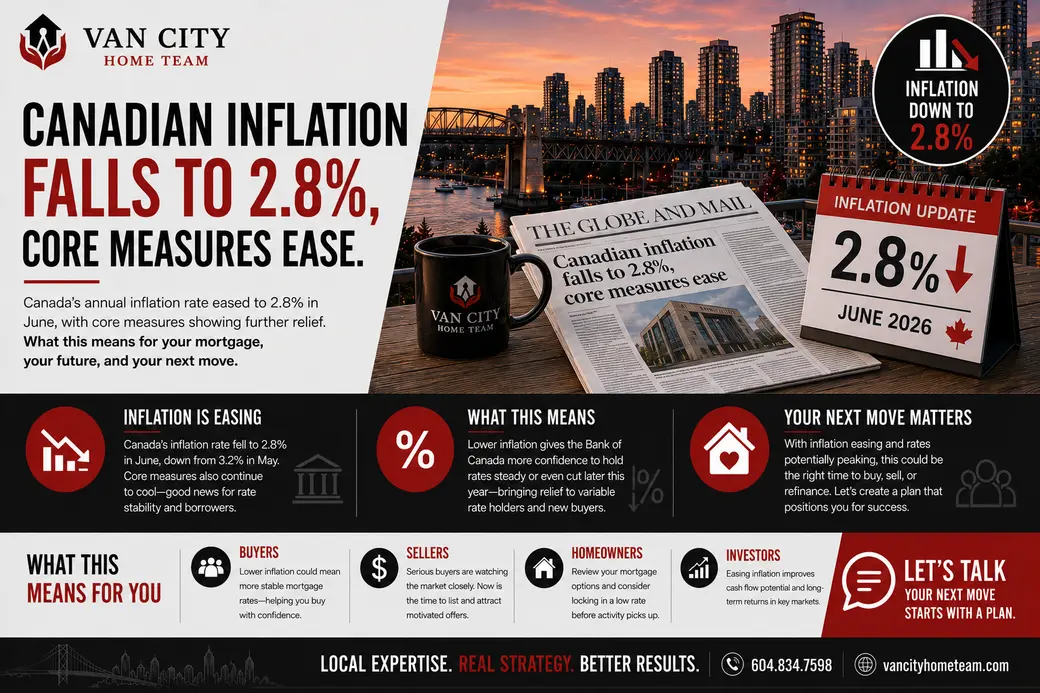
(Bloomberg) — Canada’s inflation rate slowed by more than expected last month as gasoline prices eased and a key measure of core inflation dropped below 2% for the first time in nearly six years.
The consumer price index rose by 2.8% in June, Statistics Canada reported on Monday. That’s down from 3.2% in May — which was the highest level in more than two years — and lower than the 2.9% rate expected in a Bloomberg survey of economists.
The average of the Bank of Canada’s preferred median and trim measures of core inflation was 1.85%, marking the lowest rate since September 2020 and the first time the metric has fallen below 2% in nearly six years.
The softer-than-expected inflation report adds more evidence that inflationary effects of the Iran war aren’t yet spreading beyond energy. The Bank of Canada has warned it may have to raise interest rates if higher energy costs feed into other prices, but cooler core inflation suggests economic slack is offsetting price pressures from the war.
“This report confirms the recent view from the bank that higher energy costs are not leading to broad inflationary pressures,” said Charles St-Arnaud, chief economist at Servus Credit Union.
“However, with gasoline prices remaining elevated and oil prices increasing in recent weeks — leading to continued elevated freight costs — it is probably still too early for the bank to lower its guard.”

The loonie fell to the day’s low versus the U.S. dollar after the release of the report, down 0.2% to C$1.4046 as of 9:00 a.m. in Ottawa. Short-term Canadian debt rallied, with the two-year yield down about four basis points to 2.83%.
“The wait-and-see approach for the Bank of Canada appears to be the right choice and suggests the same for the Fed and Bank of England,” said Win Thin, chief economist at Bank of Nassau 1982.
Gasoline prices were still up 20.5% in June from a year ago, but that’s down from a 33.2% increase in May.
On a monthly basis, gasoline prices fell by 10.2% as diplomatic efforts to end the war between the US and Iran started to bring down global oil prices. The two sides had reached a ceasefire in mid-June, but that’s since collapsed, adding to uncertainty about energy prices.
The monthly decline in gasoline prices was the largest since April 2025, when the consumer carbon levy was scrapped.
The consumer price index also fell by 0.4% month-over-month, marking the largest decrease since December 2024.
Grocery prices last month increased annually by 3.9%, down from 4.3% in May. The slowdown is attributed to slower price growth for fruit due to lower prices for grapes. Shelter price inflation declined to 1.5% in June, and has remained below 2% since February.
Meanwhile, traveller accommodation increased by 10.1% on a yearly basis, up from 2.5% in May, as the FIFA World Cup kicked off. Travel tours were also up 6.8% annually in June, rising sharply from 0.7% in May.
The Bank of Canada held its policy rate at 2.25% for a sixth consecutive meeting last week, with its projections suggesting the economy will rebound and inflation pressures will fade. But it also warned that uncertainty remains high, and said policymakers are “prepared to adjust monetary policy as needed.”
The central bank’s monetary policy report projects inflation will average 2.5% in 2026, and will return to its 2% target by early next year.
“It’s clear that the output gap is weighing heavily on underlying inflation,” Benjamin Reitzes, a rate strategist with the Bank of Montreal wrote in a report to investors. “This will keep the bank comfortably on the sidelines.”
–With assistance from Mario Baker Ramirez.
©2026 Bloomberg L.P.
Categories
GET MORE INFORMATION