Metro Vancouver faces huge bill for infrastructure to allow housing construction
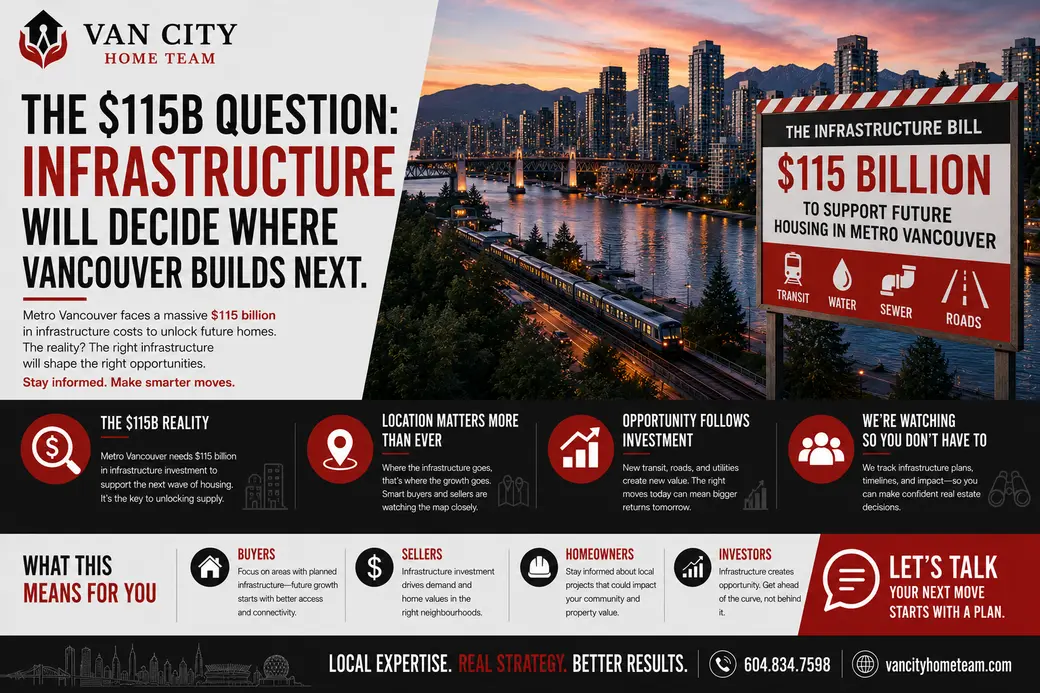
A new report suggests the cost to support construction of 570,000 new housing units approaches $115 billion
Metro Vancouver taxpayers could face a $115 billion bill in the next 15 years to build the infrastructure needed to support the 570,000 new homes needed in the region by 2041.
Metro staff are calling for negotiations on new funding from the provincial and federal governments after a report cited the multi-billion-dollar estimate for new and upgraded water pipes, sewers, roads, schools, community centres and health care facilities.
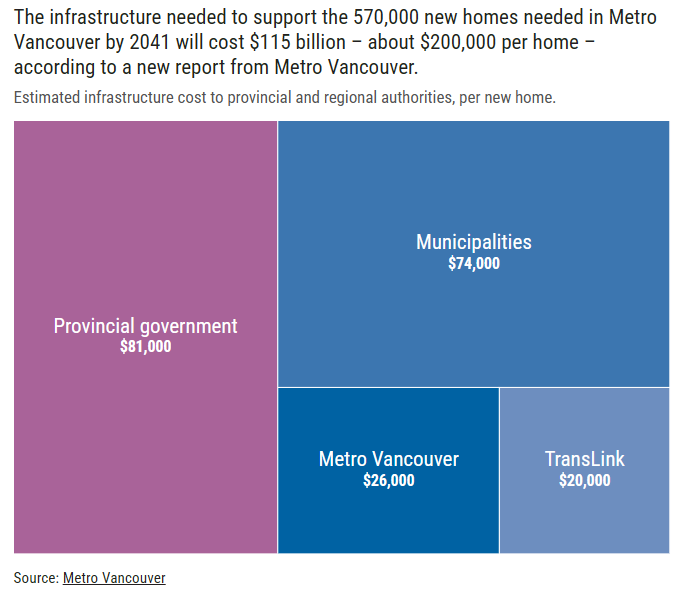
Housing needs reports filed by each municipality added up to the 570,000 new homes estimate. A consulting firm hired by Metro then estimated the cost for the needed new infrastructure at $114.8 billion or about $201,000 for each new home.
The report suggests 40 per cent of the costs fall under provincial responsibilities, while Metro municipalities could be responsible for 37 per cent and Metro Vancouver 13 per cent. The remaining 10 per cent would be for TransLink transit upgrades.
Altogether, the costs work out to roughly $80,000 for every person expected to occupy the new homes.
“The purpose of the study is to support evidence-based advocacy and dialogue with the provincial and federal government related to infrastructure funding, which I think we all recognize has been a challenging dialogue over the years,” said Jonathan Cote, deputy general manager of regional planning and housing policy for Metro Vancouver and a co-author of the report.
“I think we can all recognize that, whether we’re talking about community centres or we’re talking about schools, these are all the necessary components to build the types of communities that we all talk about in our local neighbourhoods.”
Metro Vancouver said it will not be commenting further on the report until after the next board meeting on July 24.
$115 billion bill for new Metro homes
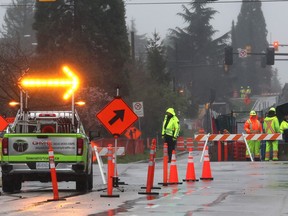
Last month, Prime Minister Mark Carney and Premier David Eby announced they were spending $7 billion over the next 10 years to improve the province’s infrastructure, but experts and local officials say that’s a tiny fraction of what is needed.
“It’s really almost at most a Band-Aid when you need a suture,” said Andy Yan, director of SFU’s City program.
He said the parts of Metro Vancouver that are going to be hardest hit by infrastructure costs are municipalities south of the Fraser River like Surrey, Richmond, and Langley. They are growing rapidly and already face a deficit when it comes to necessities like roads, sewer pipes, schools and community centres.
Langley Township Mayor Eric Woodward said the problem is that municipalities can’t afford the cost and senior government have a tendency to pass off anything they can to a future government down the road.
He said his community desperately needs a new community centre, upgrades to Langley Memorial Hospital, and new elementary and middle schools in Willoughby, but doesn’t believe it will get much from Eby or Carney given it is represented by Conservatives in both Victoria and Ottawa.
“They identified in the initial announcement that it would be spent and directed toward ‘priority cities,’ and I’m still waiting to hear what that means,” said Woodward.
B.C. Housing Minister Christine Boyle was not available for an interview.
In a statement, a ministry spokesperson said the cost of building infrastructure is one of the considerations for increasing density.
“The research shows that it’s much more cost-effective to provide infrastructure and services to neighbourhoods with small-scale multi-unit housing and apartment buildings than neighbourhoods of single-family homes,” the spokesperson said.
UBC professor Tom Davidoff said that one method of raising more revenue to help pay for growth is by increasing property taxes.
“I think we do property tax too little, income and sales tax too much. That’s definitely true in Greater Vancouver,” said Davidoff.
“An important question in terms of whether this should be on development charging or property taxes or something else, is how much of this is new spending because of new homes, and how much of this is aging infrastructure that would need repair.”
Categories
Recent Posts









GET MORE INFORMATION